Due to changes in my circumstances over the last year this blog will now cease.
Thank you to all my of my readers.
Best wishes
Ruth
Saturday, 25 February 2017

Wednesday, 22 February 2017
Why Library Is Not A Dirty Word: Presentation Slides

Ruth Rikowski
Oxford, 2015
WHY LIBRARY IS NOT A
DIRTY WORD:
PRESENTATION SLIDES
The presentation slides for Ruth Rikowski’s talk at The
Froud Centre, Manor Park, London, on 10th June 2016 –are now
available at Academia.
Why Library Is Not A Dirty Word:
Reclaiming Its Power And Possibility
Presentation slides @ http://www.academia.edu/30467128/Why_Library_is_Not_a_Dirty_Word_Reclaiming_its_Power_and_Possibility_Presentation_
Ruth Rikowski @ Academia: http://lsbu.academia.edu/RuthRikowski
Glenn Rikowski
In addition, Glenn Rikowski also has a new post at Academia:
The
Woodhead Federation? The Business Takeover of Schools in England
This can be viewed at: http://www.academia.edu/31544770/The_Woodhead_Federation_The_Business_Takeover_of_Schools_in_England_Presentation_
Glenn Rikowski @ Academia: http://independent.academia.edu/GlennRikowski
Saturday, 22 October 2016
Additions to Academia Posts: October 2016 - RUTH RIKOWSKI

Ruth Rikowski
@ Framlingham Castle, Essex
ADDITIONS TO ACADEMIA
POSTS:
OCTOBER 2016 – RUTH RIKOWSKI
Ruth Rikowski has
posted some new papers to Academia
These are as follows:
Rikowski, Ruth (2001) GATS:
private affluence and public squalor? Implications for libraries and
information, Managing Information,
Vol.8 No.10, December, pp.8-10, online at: http://www.academia.edu/27814491/GATS_private_affluence_and_public_squalor_Implications_for_libraries_and_information
Rikowski, R. (2002) The Corporate Takeover of Libraries, Information for Social Change, No.14,
winter 2001/02, online at: http://www.academia.edu/27807996/The_Corporate_Takeover_of_Libraries
Rikowski, R. (2002) The
WTO/GATS Agenda for Libraries, Talk prepared for a public meeting at Sussex
University, 23rd May 2002, online at: http://www.academia.edu/27815712/The_WTO_GATS_Agenda_for_Libraries_Talk_prepared_for_public_meeting_at_SUSSEX_UNIVERSITY
Rikowski, R. (2002) A First-Time in Glasgow: impressions of
the IFLA Conference, 2002, IFLA Journal,
Vol.28 Nos.5/6, pp.278-280, online at:
Rikowski, R. (2003) Globalisation
and Libraries – House of Lords Paper, in: Report by House of Lords, Select
Committee on Economic Affairs, Session 2002-03, 1st Report, Volume
of Evidence, Part 2, HL Paper 5-11, London: The Stationary Office, online at: http://www.academia.edu/27807221/Globalisation_and_Libraries_House_of_Lords_Paper
Rikowski, R. (2003) The Significance of WTO Agreements for
the Library and Information World, Managing
Information, January / February, Vol.16 No.1, p.43, online at: http://www.academia.edu/27814793/The_Significance_of_WTO_Agreements_for_the_Library_and_Information_Profession
Rikowski, R. (2003) Tripping Along With TRIPS? The World
Trade Organization’s agreement on Trade-Related Aspects of Intellectual
Property Rights (TRIPS) and its implications for the library and information
world, Managing Information, Vol.10
No.3, April, pp10-12, online at: http://www.academia.edu/27814936/Tripping_Along_with_TRIPS_The_World_Trade_Organizations_agreement_on_Trade-Related_Aspects_of_Intellectual_Property_Rights_TRIPS_and_its_implications_for_the_library_and_information_world
Rikowski, R. (2003) The Role of the Information Professional
in Knowledge Management: The Beginning of the End or the End of the Beginning
for the Library and Information Profession? Managing
Information, Vol.10 No.4, pp.44-47, online at: http://www.academia.edu/27814711/The_Role_of_the_Information_Professional_in_Knowledge_Management_The_Beginning_of_the_End_or_the_End_of_the_Beginning_for_the_Library_and_Information_Profession
Rikowski, R. (2004) Creating Value from Knowledge in the
Knowledge Revolution, Information for
Social Change, No.20, winter 2004, online at: http://www.academia.edu/27807687/Creating_Value_from_Knowledge_in_the_Knowledge_Revolution
Rikowski, R. (2008) Digital Libraries and Digitalisation: an
overview and critique, Policy Futures in
Education, Vol.6 No.1, pp.5-21, online at: http://www.academia.edu/27815559/Digital_Libraries_and_Digitisation_an_overview_and_critique
Rikowski, R. (2008) Computers / Information and
Communications Technology, the Information Profession and the Gender Divide:
Where are we going? Policy Futures in
Education, Vol.6 No.4, pp.482-506, online at: http://www.academia.edu/27815632/Computers_Information_and_Communications_Technology_the_Information_Profession_and_the_Gender_Divide_where_are_we_going
For all of Ruth
Rikowski’s papers at Academia, see: http://lsbu.academia.edu/RuthRikowski
For all of Glenn
Rikowski’s papers at Academia, see: http://independent.academia.edu/GlennRikowski
Thursday, 18 August 2016
Reviewing Our History and Making Plans: The Social Science Centre - Lincoln

REVIEWING OUR HISTORY
AND MAKING PLANS
THE SOCIAL SCIENCE
CENTRE
LINCOLN
Saturday 27th August 2016
10.00 – 4.00
St. Swithin’s Community Centre
Croft Street
Lincoln
LN2 5AZ
Location: https://goo.gl/5Q5NNl
St. Swithin’s Community Centre: http://www.stswithinscroftstreet.org.uk/
The Social Science
Centre (SSC), Lincoln is hosting an event to look back at its activities
since it was founded in 2011 and to make plans for its future.
10:00–12:00: SSC on Reflection,
2011–2016 (SSC members only)
A chance for all past and present members of the Social
Science Centre to reflect on their experiences in the Centre, our activities,
roads we have not taken, changes we should make and hopes for the future.
Highlights to be shared with others later in the day.
12:30–1:30: Lunch (Public, everyone welcome)
Please join us for
lunch!
1:30–4:00: Co-operative
Higher Education in Lincoln (Public, all welcome)
Ideas and making plans for the term/year. It has already
been suggested we run courses on Brexit and the co-operative movement in
Lincoln and the UK
What is the SSC?
The SSC organises higher education that explores the
everyday experiences of its members – who are both students and teachers –
through concepts and ideas developed in the social sciences. This includes
making critical sense of social problems (like ‘austerity’, racism and
nationalism or the privatisation of schools) and important local and global
events like ‘Brexit’, learning how they affect us and how we might have an
effect on them. Our past courses – The Social Science Imagination, Co-operation
and Education, and Know How: Do-It-Ourselves Higher Education – all offered
different approaches to this learning.
We are a co-operative organisation that is owned and run by
our members. This means that we not only have an experience of higher
education, but can decide together what this education should be, how it works
and why it matters. All our members can help run the Centre by taking part in
democratic decision-making processes and collective ownership and
responsibility. No one pays for learning or gets paid for teaching at the SSC
because we do not believe knowledge should be for sale. Members with financial
means make small monthly contributions to the co-operative to pay for room hire
and other running costs.
For more information about the SSC, visit our website: http://socialsciencecentre.org.uk
***END***
‘Human Herbs’ –
a song by Cold Hands & Quarter Moon: http://www.youtube.com/watch?v=Au-vyMtfDAs
Posted here by Glenn
Rikowski
Glenn Rikowski @ Academia: http://independent.academia.edu/GlennRikowski
Ruth Rikowski @ Academia: http://lsbu.academia.edu/RuthRikowski
Tuesday, 16 August 2016
New Academia Posts - Ruth Rikowski
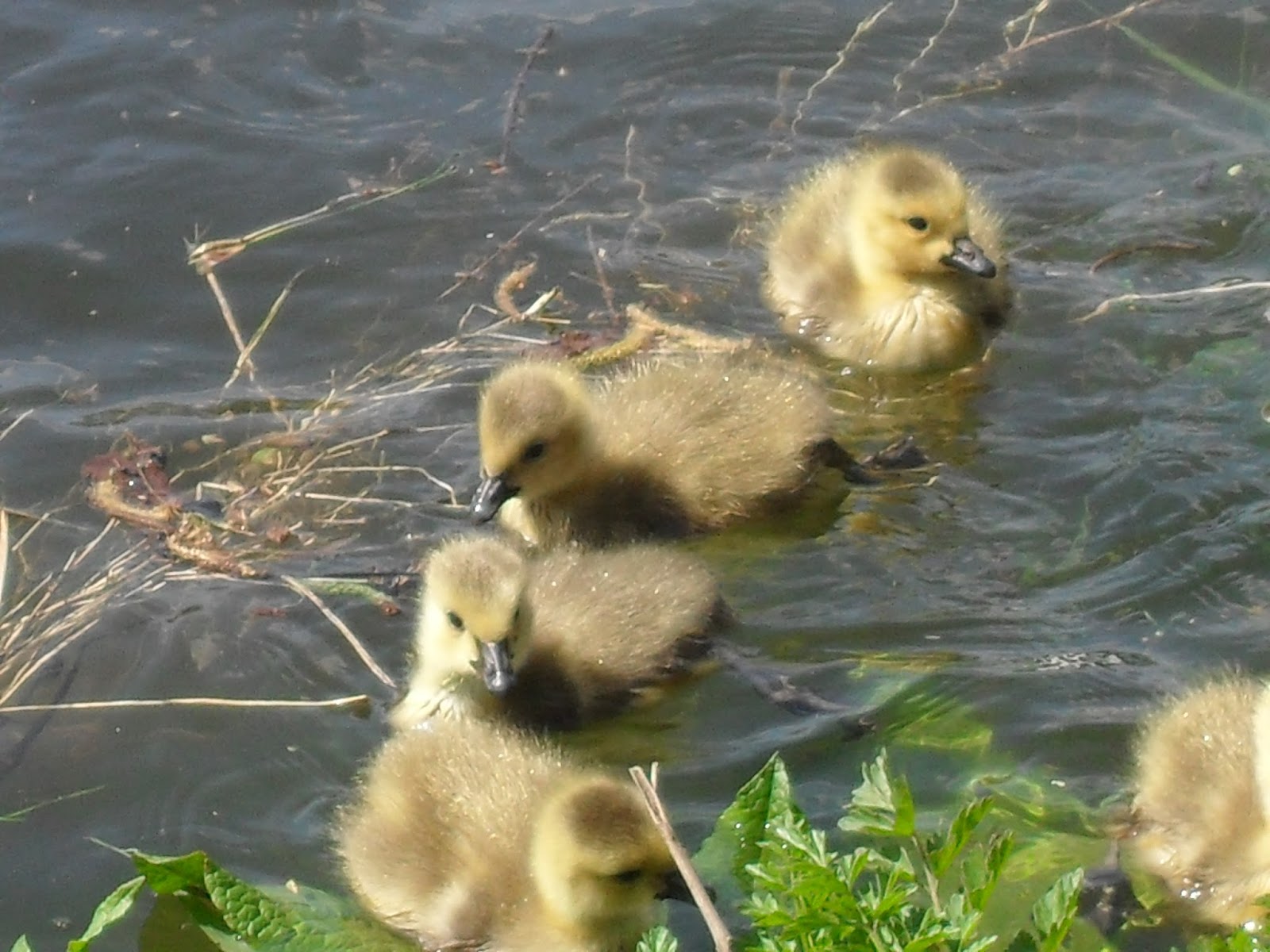
Richmond, River Thames
4th May 2016
Picture taken by Glenn Rikowski
NEW ACADEMIA POSTS –
RUTH RIKOWSKI
Ruth Rikowski has
posted some new papers to Academia. These are as follows:
Rikowski, R. (2005) Traditional Knowledge and TRIPS, Information for Social Change, winter,
Issue No. 22, at:
Rikowski, R. (2004) On the impossibility of determining the
length of the working-day for intellectual labour, Information for Social Change, summer, Issue No.19, at: http://www.academia.edu/27738919/On_the_impossibility_of_determining_the_length_of_the_working_day_for_intellectual_labour
Rikowski, R. (2003) TRIPS
into the Unknown: libraries and the WTO Agreement on Trade-Related Aspects of
Intellectual Property Rights, IFLA
Journal, Vol.29 No.2, pp.141-151, at: http://www.academia.edu/27738723/TRIPS_into_the_Unknown_libraries_and_the_WTO_Agreement_on_Trade-Related_Aspects_of_Intellectual_Property_Rights
Rikowski, R. (2003)
Library Privatisation: Fact or Fiction? Information
for Social Change, summer, Issue No.17, at: http://www.academia.edu/27765073/Library_Privatisation_Fact_or_Fiction
Rikowski, R. (2002) Globalisation and Libraries – Summary Paper,
House of Lords, Select Committee on Economic Affairs, Inquiry into the Global
Economy, 22nd January, London, at: http://www.academia.edu/27768077/Globalisation_and_Libraries_-_Summary_Paper
Rikowski, R. (2002)
The WTO, the GATS and the meaning of ‘services’, Public Library Journal, Vol.17 No.2, summer, pp.48-50, at: http://www.academia.edu/26196746/The_WTO_the_GATS_and_the_meaning_of_services
For all of Ruth
Rikowski’s papers at Academia, see: http://lsbu.academia.edu/RuthRikowski
Glenn Rikowski also has a new post at Academia:
Rikowski, G. (2002)
The great GATS buyout, Red Pepper,
No.101, November, pp.25-27, at: https://www.academia.edu/27735716/The_great_GATS_buyout
For all of Glenn
Rikowski’s papers at Academia, see: http://independent.academia.edu/GlennRikowski
Friday, 20 May 2016
FOREST VOICES CHOIR: Singing at the Gate (Forest Gate Library)

FOREST VOICES CHOIR
SINGING AT THE GATE
On 16th
June 2016, from 6.30 to 8.00pm
Forest Voices will sing at The Gate
Library and Community Centre, 4 – 20 Woodgrange Road, Forest Gate, London
E7 0QH.
Come and join us for a free evening of song and
enjoyment!
Light refreshments provided.
Funded by a “Let’s Get the Party Started” grant
from the London Borough of Newham
See: https://forestvoicese7.wordpress.com/
and for the flyer relating to the event, see: https://forestvoicese7.files.wordpress.com/2016/05/flyer-forest-gate-sings-16-jun-164.pdf
Ruth Rikowski is a member
of the Forest Voices choir, and will be singing with them at The Gate on 16th
June.
***END***
‘Human Herbs’ –
a song by Cold Hands & Quarter Moon: http://www.youtube.com/watch?v=Au-vyMtfDAs
Posted here by Glenn
Rikowski
Glenn Rikowski @ Academia: http://independent.academia.edu/GlennRikowski
Ruth Rikowski @ Academia: http://lsbu.academia.edu/RuthRikowski
Volumizer: http://glennrikowski.blogspot.com
Rikowski Point: http://rikowskipoint.blogspot.co.uk/

Wednesday, 11 May 2016
Why Library Is Not A Dirty Word: Reclaiming Its Power and Possibility - VENUE & PROGRAMME CHANGES

The Froud Centre

Ruth Rikowski
WHY LIBRARY IS NOT A
DIRTY WORD:
RECLAIMING ITS POWER AND POSSIBILITY
RECLAIMING ITS POWER AND POSSIBILITY
Friday, 10th June, @ 19:00 – 20.30 (BST)
Venue Change
Now at:
THE FROUD CENTRE
The Coffee Bar
1 Toronto Avenue
Manor Park
Newham
London
E12 5JF
(Only 3 minutes walk from the original venue, the Rabbits Road Institute, Old Manor Park Library, 835 Romford Road, Manor Park, London E12 5JY - just walk a bit further up the Romford Road, towards Ilford)
A talk and discussion about Library campaigns, radical
librarianship and re-imagining the library as a public space.
Programme Change:
Speaker: Ruth Rikowski –
writer, lecturer at London South Bank University, libraries professional and
campaigner, author of Globalisation,
Information and Libraries: The Implications of the World Trade Organisation’s
GATS and TRIPS Agreements (Chandos Publishing), and a freelance editor for
Chandos Publishing, part of the Elsevier group.
Followed by Discussion
Soft drinks provided
Free Admission
No Registration necessary
***END***
Posted here by Glenn
Rikowski
Glenn Rikowski @ Academia: http://independent.academia.edu/GlennRikowski
Ruth Rikowski @ Academia: http://lsbu.academia.edu/RuthRikowski
Tuesday, 26 April 2016
A Selection of Videos on YouTube on the Shakespeare Authorship Question

Did Shakespeare Really Write Shakespeare?
On February 11, 2016, Tom Regnier gave a presentation at the
North Palm Beach (Florida) Public Library on the topic, “Did Shakespeare Really
Write Shakespeare? Or Did Someone Else?” Regnier is a lawyer; an Appeals
Attorney at Tom Regnier Appeals, P.A. This talk was distributed by the
Shakespeare Oxford Fellowship.
Real Shakespeare: Edward de Vere, the 17th
Earl of Oxford
This is a talk from
1995 by a descendent of Edward de Vere: Charles Francis
Topham de Vere Beauclerk, Earl of Burford. Despite some of his right-wing,
Little Englander nationalist, anti-academic views, he provides some worthwhile
arguments as to why Edward de Vere wrote the plays of ‘Shakespeare’.
Shakespeare Authorship / Crackpot to
Mainstream
A talk by Dr. Keir
Cutler, author of ‘The Shakespeare Authorship Question: A Crackpot’s View’
(2014).
Shakespeare Authorship
Question: Why Was I Never Told This?
A talk by Dr. Keir Cutler. He focuses on the personal
experiences that lead him to doubt whether William Shaksper of
Stratford-on-Avon wrote the plays of ‘William Shakespere’.
The Shakespeare Mystery
A ‘Frontline’
programme, originally made in 1989 – but still very interesting regarding the
Shakespeare authorship debate.
---------------------------------------------------------------------------------------------------------------------
Mark Rylance,
Founding and Former Artistic Director of the Globe Theatre being interviewed
about the Shakespeare Authorship question, saying that there is room for ‘reasonable
doubt’
Mark Rylance – Part One
(Founding Artistic Director of the Shakespeare Globe Theatre, London) –
Interview about the Shakespeare Authorship Question
Mark Rylance – Part Two (Founding Artistic
Director of the Shakespeare Globe Theatre, London) – Interview about the Shakespeare
Authorship Question
Mark Rylance tends towards Bacon, although also
thinks it could be De Vere, or even some other playwright(s)
-------------------------------------------------------------------------------------------------------------------------


IMPORTANT
Sir Derek Jacobi and
Mark Rylance discuss the ‘Declaration of Reasonable Doubt’, arguing that
there is ‘Reasonable Doubt’ about the authorship question. I have just signed
the petitions. Over 3,000 people have signed the petition. If you agree, that there is 'Reasonable Doubt' then do sign the petition!
Sir Derek Jacobi and
Mark Rylance discuss The Declaration of Reasonable Doubt – Published on YouTube
on April 24, 2016.
On the occasion of the 400th anniversary of the death of Mr.
William Shakspere of Stratford, Sir Derek Jacobi and Mark Rylance reaffirm their
support for the Declaration of Reasonable Doubt About the Identity of William
Shakespeare, which they launched in the UK in a signing ceremony in Chichester,
West Sussex, 8th September, 2007. The petition can be signed at http://www.doubtaboutwill.com

Saturday, 23 April 2016
The Tempest (through fresh eyes, for me!)


On the 400th Anniversary of the death of the man from Stratford, I thought it appropriate to write a review of a wonderful production of ‘The Tempest’ that we saw on Wed (20th April 2016) at the Rudolf Steiner House in London. Now, whilst we knew about the great work of Steiner, and indeed, Glenn taught this when he was a lecturer in Education Studies at the University of Northampton, we knew nothing about the existence of this House. It is just by Baker Street, and is very easy to find. It is the headquarters of the Anthroposophical Society in Great Britain and was built in the 1920s and 1930s. There is a lovely theatre there, as well as meeting rooms, a small library, a bookshop and a café. It is truly wonderful.
Now,
on to the play! This is the first ‘Shakespeare’ play that we have seen live,
since Glenn and I both became convinced that Edward De Vere wrote all those plays, and not Shakespeare. I have
now bought the whole BBC DVD collection – in 1978 the BBC decided to make
productions of all of the 37 Shakespeare plays. I have already watched quite a
lot of them, and they all make much more sense and are far more enjoyable to me
now that I am looking at them through the eyes of the actual author!
Still,
I read some summaries beforehand of 'The Tempest', by way of preparation. They were of some
help, but they were also rather confusing, because they did not have a clear
overview and perspective and there was too much detail.
Now,
really on to the play, which was wonderful. Great acting, fantastic and
colourful costumes, very lively etc. etc. But the main thing was that we knew clearly
what was going on! Glenn and I both felt exactly the same about it all. Much of
the play is about magic, alchemy and paganism. It was one of the last
plays, but this is a wonderfully optimistic play as opposed to ‘King Lear’ (another of the last plays), but which is so pessimistic.
This is De Vere trying to make sense of, and come to terms with his life, as he
knew he was nearing the end. King Lear is about him giving everything away,
losing everything to his daughters, and how this got him depressed and then
sent him mad (as 2 of Leer's 3 daughters were rotten). De Vere also had 3 daughters.
‘The
Tempest’, in contrast, is very optimistic. Here, De Vere manages to get control
over things, with the help of magic, alchemy and pagan rituals. Prospero (De
Vere/John Dee) was the Duke of Milan, but whilst he was reading books and
studying his brother took the Dukedom away from him. He was banished to an
island, with his only daughter.
Then,
there is a shipwreck. Prospero created the storm with his magic powers (which
he got from his books, which he was able to take with him to the island). Why
did he do this? Because Alonso (the King of Naples), and his brother and son
are on the ship. Alonso supported Prospero’s brother, in helping him to take
over the Dukedom in Milan and Prospero wants to confront him.
As
the play progresses we learn that there are now plots to kill 2 people on the
island – Prospero (lead by Caliban, the beast) and Alonso, the King of Naples
(lead by Sebastian, Alonso’s brother, who wants to take over and become the
King of Naples in similar fashion to what happened with the Milan Dukedom). In ‘Hamlet’, also, we see the brother
taking over the kingdom after his brother's death, and marrying his brother’s wife.
On
the positive side, Ferdinand (Alonso’ son) falls in love with Miranda (Prospero’s
daughter). But this is tricky stuff – 2 houses potentially ‘at war’ with each
other (as in ‘Romeo and Juliet’).
But all comes good.
Prospero,
with the help of Ariel, his magic fairy, stops the plots to kill Prospero and Alonso and rejoices in the
marriage of Ferdinand and Miranda.
So,
with his magic Prospero brings peace and tranquillity. He can now leave all
this behind and be at peace. This is De Vere realising that he is soon to die,
I feel sure, but being at peace with himself and with all those about him (as
opposed to Lear). We are left with a sense of community and of well-being.
So, Edward De Vere at the end of his days was in conflict with himself - with Lear (the negative side) and Prospero (the positive side).
See also my blog entry 'Anonymous' on 20th Novermber 2015 in regard to who wrote the plays
See also my blog entry 'Anonymous' on 20th Novermber 2015 in regard to who wrote the plays
Saturday, 2 April 2016
'Why Study the Rich?'
Public Programme at Rabbits Road Institute
Visit the Rabbits Road Institute website at: http://createlondon.org/event/rabbits-road-institute/
Rabbits Roads
Institute
Old Manor Park Library
835 Romford Road
Manor Park
London, E12 5JY
Visit the Rabbits Road Institute website at: http://createlondon.org/event/rabbits-road-institute/
'Why Study the Rich?'
April 23, 2016 12.30-5.30pm, Free
An afternoon of talks and discussion
Refreshments served. Older children and young adults welcome.
‘Why study the Rich?’ is an event that brings together
cross-disciplinary approaches to studying wealth in society. Come and listen to
talks by activists, writers and artists whose scrutiny, investigation and
differing perspectives attempt to challenge cultural narratives and societal
structures that are intrinsically linked to the maintenance of power.
Open discussion with the audience is encouraged throughout the
afternoon, as together we discuss how studies of ‘the rich’ might reveal a
deeper understanding of the conditions of contemporary life and contribute to
the debate about inequality in society.
Confirmed Speakers:
Roger Burrows, Professor of Cities at Newcastle University
Aditya Chakrabortty, senior economics commentator for the Guardian
Jeremy Gilbert, writer, researcher and activist & Professor of
cultural and political theory at UEL
Katharina Hecht, Phd student at LSE, on Economic Inequality
Jo Littler, Reader in cultural industries at City University London
Laure Provost, Artist, screening film ‘How to make money religiously’
‘Why study the Rich?’ culminates a project called The Rich as a
Minority Group by artists Ruth Beale and Amy Feneck in collaboration
with GCSE Sociology students from Little Ilford School in Newham.
Sunday, 3 January 2016
HOW I LEARNT TO LOVE THE SEAGULLS

HOW I LEARNT TO LOVE
THE SEAGULLS
Photography
Exhibition
How I Learnt To Love The
Seagulls
By Neil Whitehead
The Window Gallery
Jubilee Library
Brighton
Saturday 9th January 2016
2.30-4.30pm
How I Learnt To Love
The Seagulls is a whimsical yet in-depth study of the birds that are hard
to avoid seeing. The series combines genres of photography using studio,
street, and nature photography and experiments with ways of displaying
photography. The work is humorous, emotive, beautiful and even political, and
is an untypical look at our most noticeable wildlife.
114 framed C-Prints printed on Matt Fujicolor Professional,
1 Hard Back Silk Lustre Book.
Brighton Jubilee Library.
Window Gallery, inside and out.
There will be snacks, wine, and a nice time on
Saturday 9th 2:30pm til 4:30.
Saturday 9th 2:30pm til 4:30.
If you can't make it to that, the exhibition will be on show
4th January 2016 until 10th of January 2016.
4th January 2016 until 10th of January 2016.
10am to 7pm - Monday to Thursday
10am to 5pm - Friday to Sunday.
RSVP to: gulls@neilphilipwhitehead.co.uk
See more @: http://heyevent.uk/event/re6p3rgdhth4ca/photography-exhibition-how-i-learnt-to-love-the-seagulls
***END***
‘Human Herbs’ –
a song by Cold Hands & Quarter Moon: http://www.youtube.com/watch?v=Au-vyMtfDAs
Glenn Rikowski @ Academia: http://independent.academia.edu/GlennRikowski
Ruth Rikowski @ Academia: http://lsbu.academia.edu/RuthRikowski
Friday, 11 December 2015
Forest Voices Choir singing 'Line Up' - now on YouTube
Forest Voices Choir
Singing 'Line-up!'

Forest Voices Choir (that I am a member of) sang 3 songs for the turning on of the Christmas lights event. The lights were turned on by Robin Wales, the Mayor of Newham, on 5th December 2015. 2 of the songs were Christmas Carols and the other was a lovely song advocating peace throughout the world. It is called 'Line Up' (by H. Yeomans).
Here are the words for 'Line Up':
Line up, line up
Wo oh
For your place in the peaceable kingdom
Yeh, yeh, yeh.
Line up, line up
Wo oh
For your place in the peacable kingdom
Yeh, yeh, yeh.
Line up, line up
Wo oh
For your place in the peacable kingdom
Yeh, yeh, yeh
Bring your songs of freedom for a brave new world
Let me hear you
Sing, sing now.
Line up!
The rich and the poor
The weak and the strong
The humble and the proud
Won't you sing out loud
The merciful of heart
The sinner and the saint
The forgiven and the wrong
Find your voice in song
No differentiation between black and white
Let the Arab man stand by the Israelite
There ain't no creed, there ain't no colour
But the blood that flow thru your sister and brother.
*Repeat lines up to 'Line Up'.
What great messages!
I have just loaded the video of the Forest Voices Choir singing 'Line Up' on to YouTube.
This is the first item that I have ever loaded anything on to YouTube! Hopefully, I will be loading up a few more items in the future.
See:
https://www.youtube.com/watch?v=ayWOiJdx5bs
Forest Voices Choir also have a website - see
https://forestvoicese7.wordpress.com

Neighbours at Junior School!

Well - this is amazing!
My neighbour opposite has just found out/just realised that we were at the same Junior School together - in Odessa Road, Forest Gate!
Unbelievable?
Sounds it.
But no - it is true.
He has copies of the class register - and bingo - both our names are on it.
He still remembers and knows loads about many of the others in the class but I can only remember a couple. I passed the 11+ so went on to a different secondary school, and did not keep up the contact.
But I was always rather in a world of my own anyway if the truth be told (having my head buried in my books and in a fantasy world and all that) and well, I can still be rather like that!
Even so, however did he remember me? Both him and another person from school recognised me - he said it was because of my hair! Good job I did not cut it and change it eh!
This neighbour has lived there for 30 years but we have only just 'found each other', as it were.
Isn't it wonderful!
Does this call for a school reunion? Rather a nice idea!
What a small world, and all that!
Wednesday, 9 December 2015
Open Mic at the 'Plough and Harrow' Pub every Sunday 8pm - 10.30pm

The Plough and Harrow
Leytonstone
OPEN MIC SESSIONS AT THE
'PLOUGH AND HARROW' PUB
'PLOUGH AND HARROW' PUB
Function Room
419 High Road Leytonstone
Leytonstone
LONDON
E11 4JU
Every Sunday from 8.00pm - 10.30pm
Come and Join Us
Regular house band, regular performers, plus new musicians and performers always welcome.
Bands and solo artists.
Enjoy live music, local musical talent, as well as some surprise artists from abroad (e.g. USA).
Also provides a support and network for local musicians.
Victor Rikowski performs there quite regularly (playing guitar and singing) and watch this space for other names that you might recognise from this blog.
Rock, rock 'n' roll, folk, blues and much more
A great night out and great company (and it's all FREE).

The Function Room
Plough and Harrow
Leytonstone
Tuesday, 24 November 2015
An Alternative to Neo-Liberal Education - Venue Change!

AN ALTERNATIVE TO
NEO-LIBERAL EDUCATION
NEW ANARCHIST
RESEARCH GROUP
JOINT MEETING WITH
THE SOCIAL SCIENCE CENTRE (LINCOLN)
Saturday 28 November 2015
2.00 pm - 4.30pm
VENUE CHANGE
NOW AT THE MAYDAY
ROOMS
Apologies for the short notice but unfortunately it has been necessary
to change the venue for the meeting on Saturday 28 November. This will
now be held in the MAYDAY ROOMS, 88
Fleet Street, London EC4Y 1DH, 2.00pm – 4.30pm.
The Social Science Centre (SSC) in Lincoln is a
self-organised co-operative higher learning provider that is democratic at all
levels of its organisation. The scholars who are members of the Centre work and
study together whether they are traditionally students or teachers. One of the
aims of the Centre is to analyse and dissolve the tensions in the relationships
between research and teaching, and students and academics. Set up by academics
from the University of Lincoln, the Centre has no relationship with the
University, although it is a critique of the formal institution as a
dysfunctional neoliberal arrangement in many ways. The SSC aims to ‘reinvent’
the University and transform the scholars’ relationship to knowledge in order
to insert their own experiences into theoretical knowledges that aim to
emancipate them as active change agents. The SSC engenders provocations,
conversations and discussions that enliven the notion that all those who are
involved in active knowledge work should become (co-) producers of knowledge.
Two of the (student) scholars and an academic from Lincoln will be visiting the
Anarchist Research Group to talk
about the centre and their experiences studying there.
In this session, we would like to tell you a little about
our experiences with the SSC and then invite a discussion on the SSC,
self-organised education and the relationships between education, learning, and
social change.
The Social Science Centre provides free public higher education in the city of Lincoln and emphasises the collective and collaborative nature of education. The Centre was opened in 2011 by academics and students and Lincoln residents who feel passionately that those wishing to study higher education should not have to take on the burden of debt. There is no fee to pay when joining the Centre, only what you can afford. Free also means freedom to study outside of the current disciplinary structures of higher education around topics and issues that are of direct concern to you and your local community.
ANARCHIST RESEARCH
GROUP: Our meetings are friendly and informal. They are usually held
on the fourth Saturday each month,
at the Torriano Meeting House in Kentish town, 99 Torriano Avenue, London NW5
2RX between 2.00pm and 4.30 pm
Directions: From Kentish Town tube station walk up Leighton Road, and turn left into Torriano Avenue.
Directions: From Kentish Town tube station walk up Leighton Road, and turn left into Torriano Avenue.
We take a collection after each meeting to cover the cost of
the venue.
***END***
‘Human Herbs’ –
a song by Cold Hands & Quarter Moon: http://www.youtube.com/watch?v=Au-vyMtfDAs
Glenn Rikowski @ Academia: http://independent.academia.edu/GlennRikowski
Ruth Rikowski @ Academia: http://lsbu.academia.edu/RuthRikowski

Sunday, 22 November 2015
The Writeidea Festival 2015

Whitechapel Idea Store
I went to the Writeidea Festival 2015 last weekend, 13th-15th November 2015. Victor Rikowski told me about it; he works for the Idea Store in Chrisp Street in Tower Hamlets. But he was luckily enough this year to get the opportunity to work for and be part of the Festival, held at the Whitechapel Idea Store!
It was truly wonderful; I was very surprised about just how good it was. It ran over 3 days and there were a wide range of authors, both fiction and non-fiction, talking about and signing copies of their books. I saw David Rosenberg, for example, talking about his new book 'London's Rebel Footprints' (which I also bought), who has been leading walks on London's radical history since 2007.
Then there was James Dawson and Non Pratt, 2 writers of Young Adult (YA) fiction, who spoke about their books, including their latest books, and other YA authors (particularly the ones that they liked). Furthermore, they did it all in a really refreshing and upbeat way. I can certainly see why they are so popular with teenagers. They really related to people; to something basic in the human condition. A great way of introducing teenagers to the adult world and sex and love and all that.
Then I heard Derek Morris speak about the East End of London and about the variety of writers, artists, scientists and prosperous merchants that have arisen from it. He has written books on all of this.
Next there was Rosie Wilby, a comedian, a feminist and a lesbian talking about how she helped to run a feminist newspaper, Matrix, whilst she was at university. She used video clips, music and photo archives and she did it all with a great sense of humour, as well as with great style. It was truly delightful. And she was just so much her own person (as were James Dawson and Non Pratt).
Finally, we had Nicci Gerrard and Sean French, known as 'Nicci French' who write psychological thrillers together. What they had to say was also really fascinating.
And that was just what I saw on one day!
Altogether, it was a packed programme. There were also author such as Michael Rosen, Kate Thompson, Holly Bourne and Viv Albertine, to name but a few!
In addition, there was a Writeidea Hub with open mic slots, book signings and other special events.
The whole festival was free and there was also free tea and coffee and even some free food towards the end of the evening.
It was a truly wonderful event, I felt that I had a lot of affinity with the people at it, and I certainly intend to go again next year, all being well!
So, thanks very much Victor for telling me about it!
Here is another short write-up on the web about it all:
http://www.towerhamlets.gov.uk/news__events/news/november_2015/writeidea_gets_it_write.aspx?lang=en-gb
Friday, 20 November 2015
The Film 'Anonymous' - but essentially Edward de Vere not Shakespeare!

Edward de Vere
The Film ‘Anonymous’ – but essentially Edward De Vere not Shakespeare!
I have just watched an amazing film - ' Anonymous'.
It is a well-known fact of course, that there is a body of opinion that
argues that Shakespeare did not write all those great plays. When I heard it, I
basically dismissed it as just being ‘sour grapes’.
However, several months ago I read a brilliant book by Jonathan
Black, called 'The Secret History of
the World' (published by Quercus, London, 1988) which just turned so many of
what are thought of as conventional wisdoms and historical facts, on their
head. And we did a little research into some of it, and some of what Black says
is certainly right, such as the fact that many important people in history have been Freemasons and members of secret societies.
One of the things that Black argued was that Shakespeare did not write all these plays by himself; but instead that he was probably assisted and inspired by Francis Bacon. Black said that Shakespeare did not have the right and necessary background to write all those plays; or at least, certainly not by himself.
One of the things that Black argued was that Shakespeare did not write all these plays by himself; but instead that he was probably assisted and inspired by Francis Bacon. Black said that Shakespeare did not have the right and necessary background to write all those plays; or at least, certainly not by himself.
This got me thinking, especially as, on a personal basis, I have always
had certain issues with Shakespeare, if the truth be told, but that’s something
of another story altogether and perhaps for another day…
Anyway, we got involved with watching 'The White Queen' and 'The
Tudors' and all this lead us to return to this Shakespeare theme. Gregory Rikowski found
what looked to be an amazing and insightful film on the web: 'Anonymous' starring Vanessa Redgrave and Derek
Jacobi; directed by Roland Emmerich
and written by John Orloff, 2011. We bought it and have just watched
it. Amazing! It just turns many of the conventional wisdoms about Shakespeare on
their head. Even the 'Daily Star' said it was 'Stunning' and gave it 8 out of
10 and the Radio Times gave it 4 stars.
The film is based on a book and the author decided to look at things the
other way round. Rather than trying to get the evidence to fit Shakespeare and the
plays together (the way it is normally done), focusing for example on
Shakespeare’s grammar school education and how that classical education helped
to equip him to write the plays, he asked questions such as - 'What type of person is likely to
have written these plays?'; 'What type of background are they likely to have
come from?' 'Where might they have lived?" etc. Now, this immediately
struck a chord with me. Since writing my own novels I have come to see that
this approach is the more correct one, rather than just thinking that novelists
and playwrights create their stories and fantasies purely out of, or at least,
mainly out of ‘thin air’. Rather, they get much of their material from life.
Now, what in Shakespeare's life gave him the material to write these plays?
Well, not very much really, it would seem. This is the message that the film
conveys.
But I thought the film would focus on Francis Bacon, but no, there was not a whisper about him at all.
Instead, in the film it is Edward de Vere who wrote all
those plays, and sonnets. Now, if you think about it, it really had to be one
person, I think, because of the similarity in style throughout (you know, as
opposed to the theories that say they were written by several people). Perhaps, others could have changed them a bit here and there,
to make them 'fit' Shakespeare, but essentially I think it had to be the work
and inspiration of one person. Again, I came to this conclusion from my own
writing journey.
Now, the film puts the case that Edward
de Vere is the most likely candidate to be this one person, for a variety of
reasons; and it is a very, very powerful argument indeed. De Vere had the right
aristocratic background and would have had an education and background that was
well versed in history in general, the history of the monarchs in particular,
the classics, Latin etc. He was part of the nobility. A number of the plays are
also set in Italy and de Vere lived there for 2 years, thus giving him plenty
of material, but there is no evidence that Shakespeare ever lived in Italy at
all. And on the other hand, wherever would Shakespeare have acquired all this
vast knowledge from? It just does not add up.
There is also another point: How could one man – i.e. Shakespeare,
possibly have achieved so much in one life-time? Basically, we are told that he
was a playwright; a poet; an actor; a businessman; an entrepreneur (setting up
the Globe Theatre etc); a promoter of plays; a family man etc. etc. Now, Mozart
in contrast, for example, was a brilliant composer but was hopeless with money,
and no good at all as a businessman. But apparently, Shakespeare had it all.
Come on!
And on top of that he was no ordinary playwright either – no, he knew
loads about history, about various monarchs, he was familiar with the Classics, Greek and Latin, he had a lot of legal knowledge etc. etc. However, did he acquire all of this knowledge? The considered
wisdom is that Shakespeare acquired it from his grammar school education. But
however could he achieve all of that from school? He did not go to university
of course. Also, he had such inside knowledge on so many topics. And on top of
all of that, the playwright knew and understood just so much about the human condition.
Whilst Shakespeare’s actual background tells a different story. His
father was illiterate and his 2 daughters were illiterate. In the film Shakespeare
could read but could not write. Also, he
did not spell his name as ‘Shakespeare’ and his signature itself looks somewhat
suspect. However, I find it hard to believe that he could not write – that
seems rather extreme. If he could read (which he would surely need to be able
to do, as an actor), then surely he could write? But I reckon that his writing
style was quite basic, and certainly nothing like the beautiful writing style in all of
those brilliant plays. Derek Jacobi in the film said that no manuscripts of
the plays has ever been found in Shakespeare’s name, and there was no mention
of the plays in his will.
So, it all really does not add up. Are we having ‘the wool pulled over
our eyes’? – it certainly looks like it.
Also, there are the Cecils'; the family that had tremendous power and
influence over Elizabeth I; they were the Queen’s advisors. Now, apparently
Robert Cecil was a hunchback. Richard III in Shakespeare’s play was a hunchback
of course. When I first watched Shakespeare’s Richard III I believed the simple
message and thought that Richard III was a truly terrible person, going around
killing everyone so that he could succeed to the throne. Then, after watching
‘The White Queen’ and reading all those novels by Philippa Gregory around the
War in the Roses period I was convinced that this was completely wrong. Rather
that it was the Red Queen in the background who was obsessed about getting her
son, Henry Tudor on the throne, and would stop at nothing in order to achieve
that aim (and so various people died, including the 2 princes in the tower). Indeed,
she had some similarities to Livia, Augustine’s wife in Roman times, who was
obsessed about getting her son Tiberius to be Emperor and would stop at nothing in order to achieve that goal. Many people were poisoned. So, Phillipa Gregory shows that
some women in history were very intelligent and had a lot of power and influence in the
background, even if we do not like their actions! So, the Richard III play was
not simply about Richard III at all; but rather it was trying to get people to
see the Cecils' for the corrupt and power-mad people that they were. This was
the message in the film anyway.
Also, after all Henry VIII’s dreadful behaviour someone probably wanted to
expose the awful corruption that was going on around the monarchy and their
advisors, so felt driven to write the plays – Edward de Vere was in the right
place at the right time and had the motivation to be able to do this. But of course, he had to disguise himself, and could not have them in the public domain under his own name.
I think that society, today, is too much in awe of Shakespeare; he is
almost seen to be a Demi-God. Look at the Globe Theatre, for example (wonderful
though it is). Clearly, whoever wrote all those plays was incredibly gifted and
understood the human condition so well, on top of everything else. But that does not mean to say that he was also
a very good businessman, a good actor etc. The whole thing is very unhealthy and it exposes
lots about the problems of British society.
I think I will be able to engage with the plays somewhat better and
easier in the future now, with hopefully a better and clearer idea about their underlying
messages and where they were likely to be coming from. So, the film ‘Anonymous’
has done me a great favour, if only for this reason! I will look at it all with
somewhat different eyes now. I reckon there are lots of hidden messages in the
plays which we cannot see because we are not looking at things straight. I will
gradually get to watch the plays again, but through a different lens and are likely to have some further insights.
Subscribe to:
Posts (Atom)